


The Retail Razor: Data Blades podcast cuts through the noise, turning complex retail research into actionable insights for AI-first strategies that optimize customer experiences and business operations.Stay Sharp. Be Data-Driven. Harness AI!
Missed the last issue?
My car has lane-keeping assist. When you drift toward the line it nudges the wheel to put you back. Good intention, reasonable engineering, and it arrived bundled with the features I actually wanted. I turned it off. I brought this up on the podcast this week, and our guest had a better name for it than I did.
A Container Falls Off a Ship.
About ten minutes into recording the latest episode of our ASU AI supply chain strategy series on the Data Blades podcast, Casey stopped being polite about it.
She’d been listening to Professor Brett Duarte describe how AI can handle traceability and sustainability documentation, the timestamping, the tracking, the measurement, and she said the quiet part out loud.
That work has been sitting on somebody’s Excel file for decades. And the industry keeps aiming its attention at customer experience while it sits there.
Her words: “We’ve got bigger problems than that, that we have been waiting our entire careers to solve.”
I said the spreadsheet part back to her because I’ve watched the same thing. Every conference agenda, every vendor pitch, every keynote, all pointed at the front of the store. Meanwhile the data that decides whether the store has anything to sell lives in a workbook that one person maintains and nobody else can open.
Ok, I know what you’re thinking. We are BIG proponents of using AI to augment your store teams’ capabilities. This episode isn’t saying “Don’t do that.” We’re saying all the attention that’s been placed in the store has left back end areas like logistics and forecasting in the dark when there are SO MANY opportunities for improvement with AI. This episode (honestly, this mini-series) aims to change that by delivering guidance on where to start.
So this edition isn’t really a recap. It’s the argument Casey has been making, backed by a professor who teaches this for a living.
SPONSOR: ASU W.P. Carey School of Business
AI-Enabled Supply Chain Strategy Executive Program
3 Days. 6 Pillars. One integrated AI operating model.
Three days with W. P. Carey #2-ranked Supply Chain Management department faculty and industry leaders on capital allocation, risk governance, and where AI actually creates supply chain value — built for the executives who own the outcome.
WHO THIS IS FOR:
Chief Supply Chain Officers
Chief Operating Officers
Chief Procurement Officers
Chief Logistics or Distribution Officers
General Managers and transformation leaders
Senior executives responsible for capital strategy and risk oversight
Join peers for an executive program designed for you.
Register today at https://specialevents.asu.edu/878064 with ID Code retailrazorasu for $1,500 off the registration fee.
Start with the size of the thing.
Brett opened with a number I keep repeating to people. Logistics, once you add freight, transportation, warehousing, 3PL and 4PL together, is about a $10 trillion industry. That’s a Statista figure, and it moves with global trade, so treat it as scale rather than a constant.
Here’s why it matters more than it looks.
Most AI business cases in retail get argued against a small denominator. Conversion rate. Basket size. Call deflection. Real, but small.
A percentage point against $10 trillion is a different conversation entirely, and it’s the conversation supply chain has been shut out of because it doesn’t demo well on a stage.
A container falls off a ship.
That’s Casey again, interrupting Brett’s list of disruption types with the thing that actually happens. Yes, containers can fall off ships. See this.
Brett’s answer is the best plain-English description of a control tower I’ve heard. An agent watches outside signals, weather systems, seismic data, event feeds, and matches them against your own network. Something happens.
The agent works out which of your locations sit in the path, then which orders are affected, then whether inventory can come from a different location. Then it acts on the decision instead of putting it in a queue for a person who’s already in three meetings.
He names the specific outside sources he plugs into and one commercial tool that already does a version of this. I’m not going to list them here, because he explains why each one earns its place and that reasoning is useful to hear directly. It’s around the six minute mark.
The part that will surprise your IT team.
Brett’s real point wasn’t that you should buy a control tower. It was that a person inside your operations group can now build a narrow agent for one specific problem without waiting for a project to be funded.
He calls them citizen developers, which is a term I haven’t heard used since low-code & no-code were all the rage in the pre-AI, business intelligence era. I’d call them the reason the next two years get interesting.
Once somebody in your planning team ships one agent that works, they immediately see the next ten problems shaped the same way. That’s how capability spreads in an organization, not through a roadmap.
It’s also, obviously, how things go wrong. Which is where the last third of the episode goes.
Where I landed.
I came into this series wanting to know which use cases pay off. I came out of it thinking that’s the second question.
Brett’s line, and he says it flatly:
governance is a business capability, not an IT project.
I’ve been thinking about that phrase since we stopped recording. If governance is a capability, it has an owner, a budget and a maturity level, same as demand planning. If it’s a project, it has an end date, and then everybody moves on and forty agents keep running with nobody watching them.
And I keep coming back to Casey’s spreadsheet.
The sustainability and traceability documentation nobody wants to do is the cleanest first job to hand over. It’s measurable, it’s auditable, it’s already someone’s worst week of the quarter, and doing it well turns into a competitive position instead of a compliance cost.
If you’re looking for the first thing to automate and you want a win you can show a board, start there.
He also walks through how to choose a platform stack and how to decide between an AI-native tool and adding AI to what you already run. That comparison is worth the listen on its own, and I left it out of this issue on purpose. Give it a listen.
SPONSOR: RetailClub
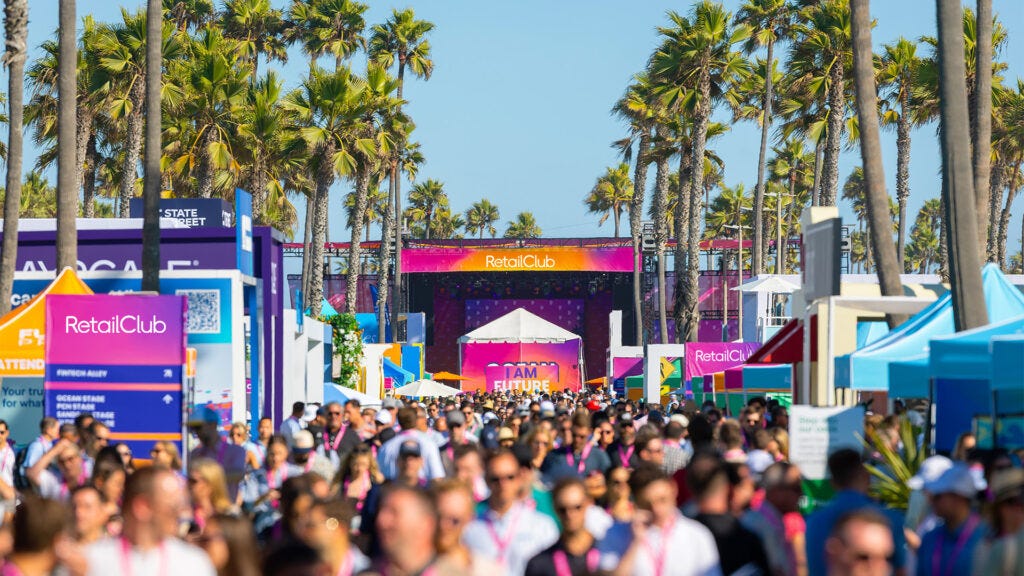
RetailClub AI Festival, September 22 - 24, 2026
The Retail Razor Podcast Network is partnering with RetailClub!
There’s still time to join us at RetailClub AI Festival. From the founders of Shoptalk and Groceryshop, RetailClub AI Festival brings together 2,000 industry leaders from September 22 to 24 for three days fully outdoors in Huntington Beach focused entirely on how AI is transforming retail.
Hear from 150 leaders shaping how AI is being used across the industry, explore the technologies changing how retail works, and connect with senior leaders from across retail, brands, technology and investment.
Last chance to register is available at retailclub.com/retail-razor-podcast. We’ll see you in Huntington Beach!
Listen to the whole series.
🎙️The Retail Razor: Data Blades, Season 2 Episode 14: “The $10 Trillion Market: AI in logistics and the governance that decides whether it pays off.”
This is part three and the last one. Procurement, then operations, then logistics, one strategy across three conversations. They’re built to be heard together, so if you’re arriving now, start at part one.
Part 3, Logistics: Watch/listen here.
Part 2, Operations: Watch/listen here.
Part 1, Procurement: Watch/listen here.

Your turn.
Brett teaches this material in ASU’s AI-Enabled Supply Chain Strategy program, October 5 to 7 in Tempe. Registration is at specialevents.asu.edu/878064 and the ID code RETAILRAZORASU takes $1,500 off. Seats are limited for the fall session. He mentioned another session is likely in the spring, so if October is impossible, that’s your other shot.
If this one was useful, subscribe. It’s free, it lands after every episode, and it’s the fastest way to get the argument without the 17 minutes.
Comment on this newsletter in Substack or join the conversation on LinkedIn.
Stay sharp. Be data-driven. Harness AI.
Sincerely,
Ricardo Belmar
The Retail Razor: Data Blades
The Retail Razor Is In The Field!
We’re on the road for the final two weeks of September!
You’ll find us recording podcast interviews in the Retail Razor beachside recording studio at RetailClub AI Festival from Sept 22-24!
Then you’ll find us in the RETHINK Retail Creator Studio at Shoptalk FALL from Sept 29 - Oct 1!
If you’re at either event, be sure and reach out to us!
We’d love your support to help us stay at the top with all our shows by giving us a five-star rating and review on Apple Podcasts, Goodpods, or Spotify.
Data Blades is part of the Retail Razor Podcast Network, alongside The Retail Razor Show, Retail Transformers, and Blade to Greatness. Find us at RetailRazor on LinkedIn, Bluesky, Threads, and Instagram. For a full transcript of this episode, visit our retailrazor.com website!