


Join the #1 Indie Podcast Network for Retail as we cut through the clutter in retail strategy, innovation & leadership to help you maximize growth for your business. Subscribe to The Retail Razor Show podcast! Stay sharp. Stay human. Stay ahead!
Missed the last issue?
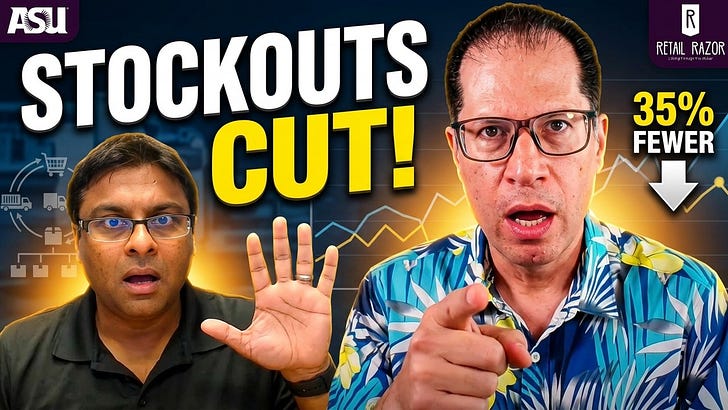
Casey spent years in the ERP and supply chain tech world, and she has a name for how capacity planning felt in those systems: “pretend functionality.” I’ve sat through enough demos to know exactly what she means. The screen exists. The button exists. And the planner still exports everything to a spreadsheet to get a number they trust. Forecasting, she said, was always the dream. Most teams never got there.
When safety innovation isn’t really about safety at all.
My car has lane-keeping assist. When you drift toward the line it nudges the wheel to put you back. Good intention, reasonable engineering, and it arrived bundled with the features I actually wanted.
I turned it off.
The problem is that it has never once agreed with me about where the lane is. It waits until I’m mid-decision and then pushes the wheel somewhere I didn’t ask it to go, so the feature built to keep me in my lane spends most of its time trying to steer me out of one. I don’t think it’s broken. I think nobody who shipped it has ever driven on roads like the ones where I live.
I brought this up on The Retail Razor Show this week, and our guest had a better name for it than I did.
Eric Athas is an editor at The New York Times. His book Saying No to New came out the same week our episode dropped, and he spent four years reporting it out with neuroscientists, behavioral economists, ad industry veterans, tech insiders and an astronaut.
He also interviewed me back in 2024, which is how I ended up on page 41 explaining why off-price retailers keep shipping in fresh inventory to keep shoppers treasure hunting. Casey read that page back to him on air. It lands differently inside his argument than it did when I said it.
Three things I’m still thinking about from that episode.
SPONSOR: ASU W.P. Carey School of Business
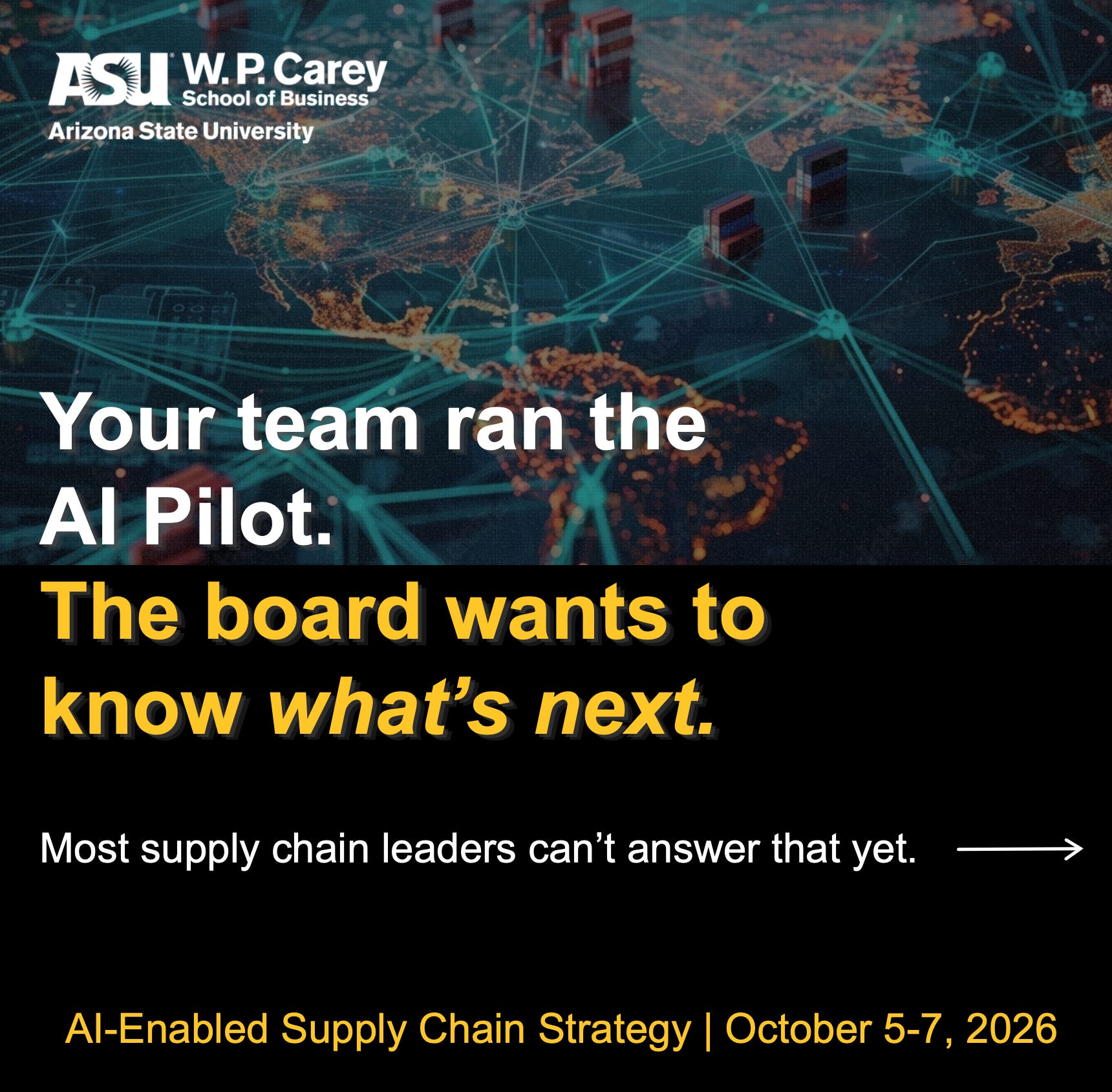
AI-Enabled Supply Chain Strategy Executive Program
3 Days. 6 Pillars. One integrated AI operating model.
Three days with W. P. Carey #2-ranked Supply Chain Management department faculty and industry leaders on capital allocation, risk governance, and where AI actually creates supply chain value — built for the executives who own the outcome.
WHO THIS IS FOR:
Chief Supply Chain Officers
Chief Operating Officers
Chief Procurement Officers
Chief Logistics or Distribution Officers
General Managers and transformation leaders
Senior executives responsible for capital strategy and risk oversight
Join peers for an executive program designed for you.
Register today at https://specialevents.asu.edu/878064 with ID Code retailrazorasu for $1,500 off the registration fee.
1. The gap we closed is where the customer used to think.
Eric’s central idea is what he calls the new thing gap: the time and distance between seeing something new and being able to get it.
In 1995, an ad for sneakers meant a couple of days of thinking and a half-hour drive to the mall. The gap was 30 minutes and five miles wide.
Now it’s about four seconds.
Our industry closed it on purpose, project by project, and every one of those had a defensible business case. I’ve worked on them. You probably have, too.
What Eric pointed out is that the gap was never empty. It held the deliberation.
Take it out and you don’t get a faster version of the same decision. You get a worse one that shows up later as a return.
2. An agent that agrees with you is not a feature.
I asked him who an agentic shopping agent is optimizing for. The shopper or the retailer. He said he doesn’t know, and that not knowing is the problem. Casey raised a third possibility I hadn’t considered: maybe it optimizes for itself, because an agent that never buys anything doesn’t look useful to whoever built it.
Then he connected it to motivated reasoning, the finding that people tend to arrive at conclusions they already wanted to arrive at.
He described a study where participants ranked photographs, had some of their rejected picks quietly slipped back into the accepted pile, and then rated those same rejected options highly on the second pass without noticing the swap.
We don’t reliably know what we prefer.
Put purchasing power behind a model that mirrors how you framed the question and you’ve built something that confirms an impulse at the precise moment there’s no time left to question it. Eric’s read: we’d be supercharging the magic pill effect.
3. Innovation theater has a tell.
Which brings me back to the lane-keeping assist. Eric interviewed Amber Case, who runs the Calm Tech Institute, and her framing is the cleanest I’ve heard on this. Informed without being burdened.
A backup camera clears that bar.
Put the car in reverse, look, go. No thinking required. Same with the little light that flashes when a car sits in your blind spot. Subtle, useful, and it never argues with you.
Now compare that to a smart TV you can get lost inside, or to Eric’s robot vacuum, which gets stuck, alerts his wife’s phone, and produces an actual conversation between two adults about a vacuum.
Casey made the connection I should have made years ago. Most of the people designing car dashboards don’t drive. Most of the people building retail technology have never worked a shift in a store. That’s how you end up with ads on refrigerator screens.
SPONSOR: RetailClub

RetailClub AI Festival, September 22 - 24, 2026
The Retail Razor Podcast Network is partnering with RetailClub!
There’s still time to join us at RetailClub AI Festival. From the founders of Shoptalk and Groceryshop, RetailClub AI Festival brings together 2,000 industry leaders from September 22 to 24 for three days fully outdoors in Huntington Beach focused entirely on how AI is transforming retail.
Hear from 150 leaders shaping how AI is being used across the industry, explore the technologies changing how retail works, and connect with senior leaders from across retail, brands, technology and investment.
Last chance to register is available at retailclub.com/retail-razor-podcast. We’ll see you in Huntington Beach!
Where I landed.
I went in braced to feel defensive. The book is called Saying No to New, and I’ve spent a career helping retailers build new things.
I came out somewhere else. Eric isn’t anti-retail and he isn’t anti-technology. He waited in line for iPhones. He describes himself as a former early adopter who burned out on it. His actual argument is narrower and much harder to wave off:
we removed something valuable by accident while doing something reasonable, and the fix is to be deliberate about where it goes back, not to put it all back.
He has a test I’m going to keep using. The curb cut test. Does this make life better for a wide spectrum of people? Curb cuts were mandated for wheelchair users and ended up serving strollers, suitcases, skateboards and scooters. Closed captioning was built for deaf and hard-of-hearing viewers and is now how everybody follows whispered dialogue. That’s the bar. (If that last sentence has you scratching your head, ask any millennial friends. They’ll explain it).
My lane-keeping assist “feature” definitely does not clear the test.
Go listen to the whole thing.
🎙️The Retail Razor Show, Season 6 Episode 12: “The New Thing Gap - Saying No to New”
I left a lot out. Eric’s answer to whether the industry owes people anything on the failure side of a purchase is better than my question was, and the story he tells about an eBay seller and a broken mug is the most useful post-purchase customer experience lesson in any episode.
Casey also gets him to name the single new thing he said yes to this year, at 1:08:13, and I’m not going to spoil that one.
If you’re new here, subscribe. We publish an edition for every episode of The Retail Razor Show, plus bonus content that doesn’t make the recording.

Your turn.
Next time you feel the urge to buy a new thing, apply the curb cut test. See where you land on the test. Ask yourself if you’ve thought about why you need that new thing.
If this landed, forward it to the person on your team who keeps telling you to buy something new just because they want to replace something old. And a five-star rating on Apple Podcasts, Spotify, or Goodpods does more for us than anything else.
Comment on this newsletter or join the conversation on LinkedIn!
Your insights may help shape the topics we explore next.
Until next time… Stay sharp. Stay human. Stay ahead!
Sincerely,
Ricardo Belmar
The Retail Razor Show
The Retail Razor Is In The Field!
We’re on the road for the final two weeks of September!
You’ll find us recording podcast interviews in the Retail Razor beachside recording studio at RetailClub AI Festival from Sept 22-24!
Then you’ll find us in the RETHINK Retail Creator Studio at Shoptalk FALL from Sept 29 - Oct 1!
If you’re at either event, be sure and reach out to us!
We’d love your support to help us stay at the top with all our shows by giving us a five-star rating and review on Apple Podcasts, Goodpods, or Spotify.
The Retail Razor Show is part of the Retail Razor Podcast Network, alongside Retail Transformers, Blade to Greatness, and Data Blades. Find us at RetailRazor on LinkedIn, Bluesky, Threads, and Instagram. For a full transcript of this episode, visit our retailrazor.com website!