


Join the #1 Indie Podcast Network for Retail as we cut through the clutter in retail strategy, innovation & leadership to help you maximize growth for your business. Subscribe to The Retail Razor Show podcast! Stay sharp. Stay human. Stay ahead!
Missed the last issue?
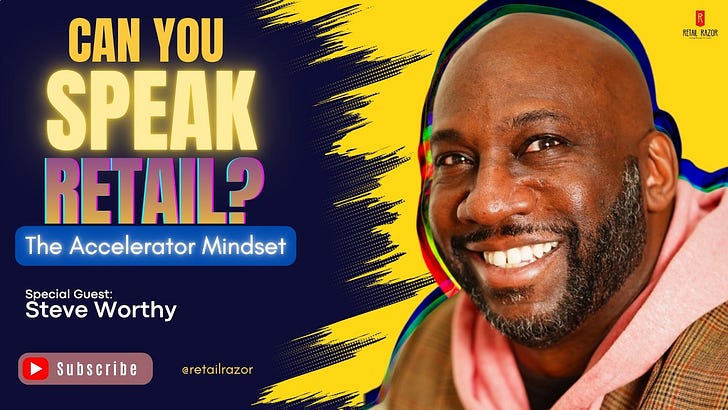
I asked Steve Worthy a question I’ve been sitting on for a long time, and I braced for a diplomatic answer. “Why do good products fail when they enter retail?” He laughed first. Then he gave me the least diplomatic answer anyone has given me on the show. This issue is especially powerful for the founders and tech companies in the audience.
What Walmart learned about in-store retail media 15 years before everyone else.
Once upon a time, in what feels like a distant land, far, far away, I stood in a Walmart and squinted at the ceiling.
This was the late 2000s. TVs up in the rafters, well above eye level, too small to read, playing audio that was losing a fight with Walmart Radio. I noticed because it was my job. I was leading product teams at Hughes, delivering managed digital signage to retailers, and I would walk stores to look at the competition and how “they did it” thinking we could do better.
What I didn’t know was that Mike Hiatt had moved his family from Salt Lake City to Bentonville on the promise that he’d get to tear it all out and start over.
And so he did.
What he built was the Walmart Smart Network, and by around 2010 it was bringing in more revenue than Walmart.com. Five years later Walmart deinstalled it.
Mike is our guest on season 6 episode 11 of The Retail Razor Show. He’s now the president of Dynamic Retailing, a retail media consultancy focused on helping technology solutions providers work more effectively with retailers. He’s also assisting retailers better execute retail media strategies inside their stores, and is on the advisory boards at Venvee and Blue Zoo.
Plus, he recently wrote the book on in-store retail media. Literally. It’s called Timing the Desert. Andrew Lipsman (whom you may remember from our previous retail media podcast episode) wrote the foreword, and Casey and I spent an hour getting the version of this history that nobody bothered to write down.
SPONSOR: ASU W.P. Carey School of Business

AI-Enabled Supply Chain Strategy Executive Program
3 Days. 6 Pillars. One integrated AI operating model.
Three days with W. P. Carey #2-ranked Supply Chain Management department faculty and industry leaders on capital allocation, risk governance, and where AI actually creates supply chain value — built for the executives who own the outcome.
WHO THIS IS FOR:
Chief Supply Chain Officers
Chief Operating Officers
Chief Procurement Officers
Chief Logistics or Distribution Officers
General Managers and transformation leaders
Senior executives responsible for capital strategy and risk oversight
Join peers for an executive program designed for you.
Register today at https://specialevents.asu.edu/878064 with ID Code retailrazorasu for $1,500 off the registration fee.
Three things I didn’t know before we hit record.
The reach was already there. Nobody could sell it.
When the Smart Network was fully lit, with welcome screens, category channels, and product-matched endcaps, Mike’s team ran the audience numbers and pitched it internally as a Super Bowl a week. I know what you’re thinking - in his words: “But we weren’t making Super Bowl money. Nothing close at all.”
The largest addressable audience in American retail, verified human, standing in front of the product, and nobody could price it.
That gap is the whole opportunity people are chasing in 2026.
The org chart killed it.
Walmart doesn’t sell shelf space. No slotting allowances. You earn an endcap with price and product.
Then Mike’s team showed up with a new idea:
a brand could hold an endcap contractually because it was buying the media there. Five media endcaps. They sold out. Mike thinks they were underpriced.
The merchants read it as marketing taking their money, and nothing cut them in. No shared bonus, no shared number. Marketing owned the network, merchants owned the space, and neither had a reason to want the other to win.
Amazon unintentionally fixed it years later. Once Amazon published ad revenue in the billions, Walmart’s merchants started treating retail media as a number worth sharing. They get bonused on retail media dollars now. Mike says that fight is “settled” at the top tier retailers and still alive at the second.
Somebody built the measurement in 2009. Nobody wanted it.
This is the part that stung, because it’s what I could never solve at Hughes. We could schedule content to one store and one daypart. We couldn’t tell a retailer it played, that anyone saw it, or that it sold anything.
In those early days, every merchant conversation ended in impressions, dwell time, and hope.
Mike hired a team called DSIQ, Tom Opdyke and William Wu, who came out of Microsoft. They built what amounted to an ad server for physical stores before the industry had the terminology for it.
Store data in, content decisions out, sales results back.
In 2009.
It was controversial internally, because the only benchmark was online click-through rates and nobody trusted the numbers.
Imagine if everyone knew then, what we know now about in-store measurement for retail media!
SPONSOR: RetailClub
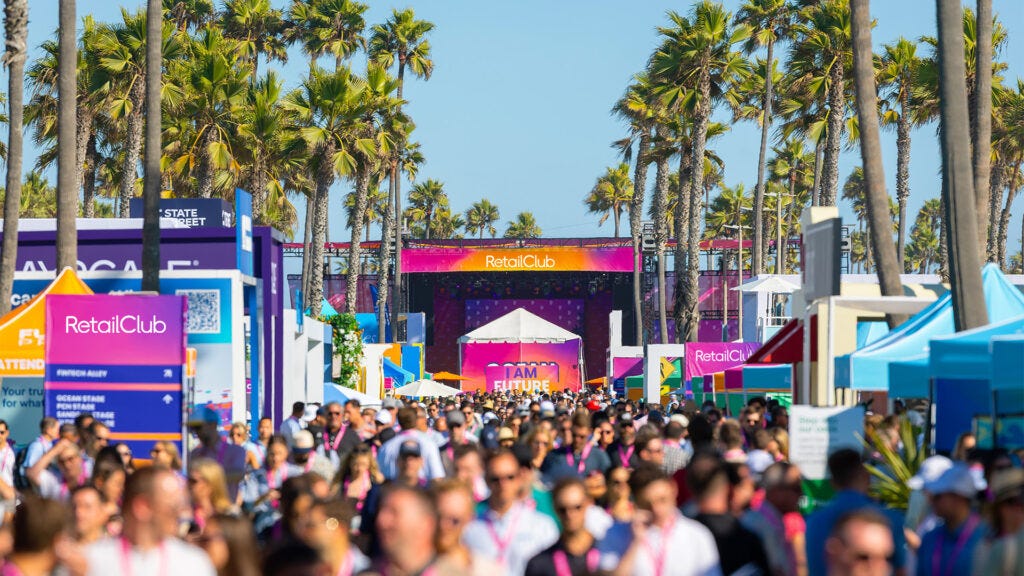
RetailClub AI Festival, September 22 - 24, 2026
The Retail Razor Podcast Network is partnering with RetailClub!
There’s still time to join us at RetailClub AI Festival. From the founders of Shoptalk and Groceryshop, RetailClub AI Festival brings together 2,000 industry leaders from September 22 to 24 for three days fully outdoors in Huntington Beach focused entirely on how AI is transforming retail.
Hear from 150 leaders shaping how AI is being used across the industry, explore the technologies changing how retail works, and connect with senior leaders from across retail, brands, technology and investment.
Late registration is now available at retailclub.com/retail-razor-podcast. We’ll see you in Huntington Beach!
Where I landed.
I’ve been both skeptical and hopeful of the in-store retail media hype cycle, mostly because I lived through the last one and watched it not work. This conversation moved me. And brings me hope that the industry, in partnership with vendors, will get it right this time.
Every structural thing that killed the Smart Network has since been fixed by someone else for some other reason.
The online teams built the measurement and delivery stacks.
Amazon made the revenue big enough that merchants wanted in.
AI made per-location content cheap enough to produce, which is where Mike’s five A’s always hit a wall.
He calls the answer localization rather than personalization: treat 2,000 stores as 2,000 super customers, each with its own weather, local teams, and sales mix.
Measurement standards are still broken, and Mike’s honest about it. In-store is fragmented across content management systems, network operators, and ad servers, and he expects consolidation before the serious money arrives. He names Kroger as the likeliest to reach what Andrew Lipsman calls the cereal moment.
And one caution I appreciated him saying out loud: in-store will never be as lucrative as online, because the retailer buys the hardware. His comparison on that point is worth the listen on its own, especially if you’re managing margin.
Two things I’m leaving in the episode.
At 32:05 Mike names the exact hire that kills a retail tech deal, with an example that made me wince.
At 18:00 he tells how the book got its title, which involves a second-century parable and a use of AI I did not see coming.
Watch, listen, read.
🎙️The Retail Razor Show, Season 6 Episode 11: “The In-Store Retail Media Screens That Out-Earned Walmart.com”
Mike’s story (and book) are full of lessons learned and we managed to capture many of them in the full episode. It’s live now, available everywhere you find podcasts.
His book is Timing the Desert: A Front-Line Perspective on Retail Media, Readiness, and Scale. If you’re in retail media, you owe it to yourself to run out and get a copy of this book. History does have a tendency to repeat itself, so take advantage of Mike’s lessons learned!
If you’re new here, subscribe. We publish an edition for every episode of The Retail Razor Show, plus bonus content that doesn’t make the recording.


Your Turn.
If this landed, forward it to the person on your team who keeps asking whether you should put screens in the stores. And a five-star rating on Apple Podcasts, Spotify, or Goodpods does more for us than anything else.
Next episode: we’re joined by New York Times editor, Eric Athas. His new book, Saying No to New: Why New Things Are Stealing Your Time, Money and Happiness, and How to Take Back Your Life, delivers a different kind of lesson. We’re reflecting on all the new things retail has brought us in recent years. Are they worth it? A slight philosophical detour for us, but one that you’ll appreciate!
Comment on this newsletter or join the conversation on LinkedIn!
Your insights may help shape the topics we explore next.
Until next time… Stay sharp. Stay human. Stay ahead!
Sincerely,
Ricardo Belmar
The Retail Razor Show
Thank You for Your Support!
We’re honored to be the #1 Indie Podcast Network for Retail on Goodpods with our shows regularly in the Top 5 of the weekly & monthly Management podcast charts. Plus, the #1 podcast in the weekly & monthly Indie Marketing and Indie Careers podcast charts.
We’re also excited to have two podcasts ranking in the Top 20 Retail Management podcasts and a Top 3 Retail Careers podcast on Apple Podcasts!
We’d love your support to help us stay at the top with all our shows by giving us a five-star rating and review on Apple Podcasts, Goodpods, or Spotify.
The Retail Razor Show is part of the Retail Razor Podcast Network, alongside Retail Transformers, Blade to Greatness, and Data Blades. Find us at RetailRazor on LinkedIn, Bluesky, Threads, and Instagram.
For a full transcript of this episode, visit our retailrazor.com website!