


From the #1 Indie Podcast Network for Retail, The Retail Razor: Blade to Greatness retail leadership podcast explores the skills, mindset, and strategies retail executives need to lead successfully in the AI era. Stay Sharp. Lead Boldly. Stay Human.
Missed the last issue?
Every so often Casey and I record an episode that makes me want to put my own notes down and just listen like everyone else. This was one of those. Our guest was Louisa Loran. Former exec at Google, Maersk, Moet Hennessy, and Diageo. Advisor to CEOs. Author of a recent book called Leadership Anatomy in Motion.
Scaling Innovation in Retail Without Innovation Theater.
Casey and I got Andy Laudato back on the show, again. Sixth time now, I think. I’ve lost count as he’s become a fan favorite across the podcast network. Every single time he says something that makes me want to hit pause and just sit there for a second.
This time it was a stat we keep hearing from one guest after another. He tossed it out casually, like it was nothing.
Ninety to ninety-five percent of AI projects fail.
Ninety to ninety-five percent. Andy’s the COO of The Vitamin Shoppe, so this isn’t some guy on a stage in Vegas selling you a framework. This is someone who has to look a board in the eye and explain where the budget went. Yes, he’s not the first guest to quote this stat. He may be the fifth. It’s a genuine trend. That tells you just how much everyone is paying attention to it.
So naturally, we spent the next twenty minutes talking about why retail leaders keep doing this to themselves anyway, and what it takes to scale innovation without setting money on fire.
SPONSOR: RetailClub
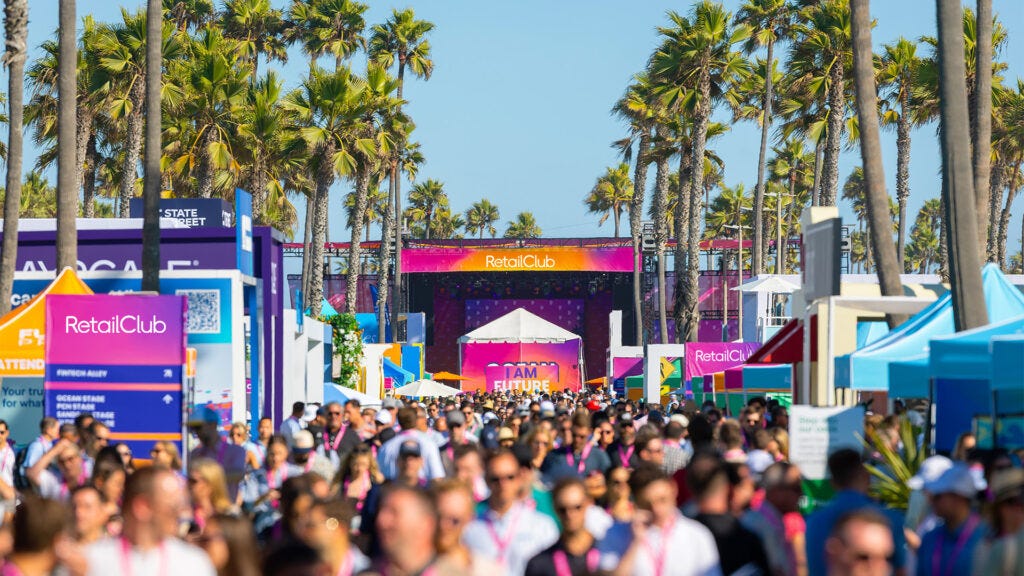
RetailClub AI Festival, September 22 - 24, 2026
The Retail Razor Podcast Network is partnering with RetailClub!
Join 2,000 retail leaders at the RetailClub AI Festival, September 22–24 in Huntington Beach. Dive deep into how AI is reshaping retail while soaking up the sun at a fully outdoor, beachside venue. Decision-makers from retailers and brands can attend with free tickets and up to $1,250 in travel reimbursement.
Head to retailclub.com/retail-razor-podcast to get your ticket today!
The Demo Room Problem.
You know the room.
Everybody’s gathered around a screen or a kiosk in the flagship store, the tech works exactly like it’s supposed to, and somebody in a nice blazer says “great, let’s put this in every store.”
Andy’s reaction to that sentence is basically: congratulations, you just set yourself on fire. That’s innovation theater in real time, and most retail leaders don’t recognize it until the bill shows up.
Here’s the part nobody says out loud in that room.
A pilot that costs $20,000 in one store does not cost $20,000 across a thousand stores. It costs $20 million.
Everybody can find twenty grand lying around. But as Andy reminds us, nobody, and I mean nobody, has an extra twenty million sitting in a drawer waiting to get spent on a “great idea.”
Andy’s answer to this isn’t complicated, and that’s what I liked about it.
Before you fall in love with a pilot, do the math on what it costs to actually scale it.
Not what it costs to look good in a demo. What it costs to be live, everywhere, for real.
Off Broadway, Not Opening Night.
Here’s the part that actually changed how I think about testing new ideas.
Andy doesn’t test big swings in the flagship store. He tests them somewhere nobody’s watching. He calls it testing “off Broadway,” which, I’ll admit it’s a good line and I’m stealing it.
The logic is simple once you hear it:
you want the smallest blast radius possible while you’re still figuring out if something works.
Your flagship is not the place to figure that out. Your flagship is the place you go once you already know it works.
I’m not going to give away exactly which stores Andy uses for this or how his teams end up volunteering for it, that part of the conversation is worth hearing him tell it himself, but the short version is this:
the stores you’d assume are the least exciting are usually the most eager to try something new. Nobody’s watching them as closely, so there’s less pressure and, weirdly, more fun.

Fail Like You Mean It.
This is the line from Andy that’s going to stick with you for a while:
rewarding failure is easy to say and really hard to do.
Everybody says they want a culture where people can take risks. Almost nobody actually builds one. The second a project doesn’t work, the instinct is to bury it, rename it, and never speak of it again. Andy calls that “the project that will not be named,” and if you’ve worked in retail for more than a week, you already know exactly which project he means at your own company.
His fix isn’t complicated either, though actually doing it takes real discipline.
Sit down. Talk through what went wrong, out loud, as a team. That’s the whole trick.
Skip that part and you didn’t just fail once. You failed twice, because you paid for the lesson and then walked away without learning it.
Where I Landed.
🎙️Blade to Greatness, Season 2 Episode 10: Scaling Innovation - A Retail COO’s Playbook
Here’s where I actually landed after this conversation, and it’s not the opinion I expected to have going in.
I used to think the hard part of innovation was coming up with the good idea. Every retailer I talk to has a drawer full of good ideas. The hard part, the actual skill of scaling innovation, is everything Andy talked about:
doing the math before you fall in love,
testing somewhere nobody’s watching, and
being willing to talk honestly about the stuff that didn’t work.
None of that is glamorous.
How AI Is Meant to Help Your Frontline.

Nobody’s writing a newsletter about their boring cost model. Except me, apparently, right now. But it’s the difference between a retailer who actually scales innovation and one who just performs it for a room full of executives once a year.
We didn’t even get to the part where Andy showed us what his team built for the new Manhattan flagship, or the reason he refuses to split his company into “innovation people” and “everyone else.”
That’s in the full episode, and it’s worth your time.
Give it a listen (or watch), and if you’re not already subscribed here, go ahead and fix that too. This is exactly the kind of conversation Blade to Greatness exists for: the unglamorous stuff that actually determines whether a retail leader succeeds.


Your Turn.
If someone forwarded you this and you want more of it in your inbox, the kind of retail writing that is occasionally useful and almost never about synergy or leverage, the subscribe button is right down there. It’s free.
Comment on this newsletter or join the conversation on LinkedIn! Your insights can help shape the topics we explore next!
Until next time… Stay sharp. Lead boldly. Stay human.
Sincerely,
Ricardo Belmar
The Retail Razor: Blade to Greatness
Thank You for Your Support!
We’re honored to be the #1 Indie Podcast Network for Retail on Goodpods having recently hit the #1 spot on the Top Weekly & Monthly Indie Business Podcast charts, plus the:
Top 4 podcasts in the Top Weekly Management Podcast charts
Top 4 podcasts in the Top Monthly Management Podcast charts
#1 podcast in the Top Weekly & Monthly Indie Careers Podcast charts
#1 podcast in the Top Weekly & Monthly Indie Marketing Podcastcharts
And we’re excited to have two podcasts ranking in the Top 15 Retail Management podcasts and a Top 3 Retail Careers podcast on Apple Podcasts!
A big THANK YOU to our YouTube viewers - we’ve over 592k views!
We’d love your support to help us stay at the top with all our shows by giving us a five-star rating and review on Apple Podcasts, Goodpods, or Spotify.
Blade to Greatness is part of the Retail Razor Podcast Network, alongside The Retail Razor Show, Retail Transformers, and Data Blades. Find us at RetailRazor on LinkedIn, Bluesky, Threads, and Instagram. For a full transcript of this episode, visit our retailrazor.com website!
retail calls it innovation theater, product calls it roadmap theater, but it's the same failure mode.. someone needed to look like they were moving before anyone agreed on what moving actually meant, so the org built a performance instead of a decision