


The Retail Razor: Data Blades podcast cuts through the noise, turning complex retail research into actionable insights for AI-first strategies that optimize customer experiences and business operations.Stay Sharp. Be Data-Driven. Harness AI!
Missed the last issue?

VIP Connect is Vendors in Partnership’s event, held the half-day before RetailClub AI Festival kicked off. Three hours. Retailers and solution providers at the same table. Nobody pitching. The whole point is to teach each other how your organization makes decisions. It was my first one. I walked out with a page of notes and one line I can’t stop repeating.
Your Order Data Is the Better AI Bet.
Quick question. When was the last time you called Amazon about an order?
I can’t remember either. When Chris Deck asked that question in our podcast studio tent at RetailClub AI Festival, Casey and I answered at the same time: you don’t need to. And that was the whole point he was making.
Chris is the Founder & CEO of Deck Commerce, an order management system company, and he joined Casey and me in Huntington Beach for our latest Data Blades podcast. Full disclosure: Deck Commerce also sponsors the episode.
I came out of it with a list of things I’d want every brand to check before Black Friday.
SPONSOR: Deck Commerce
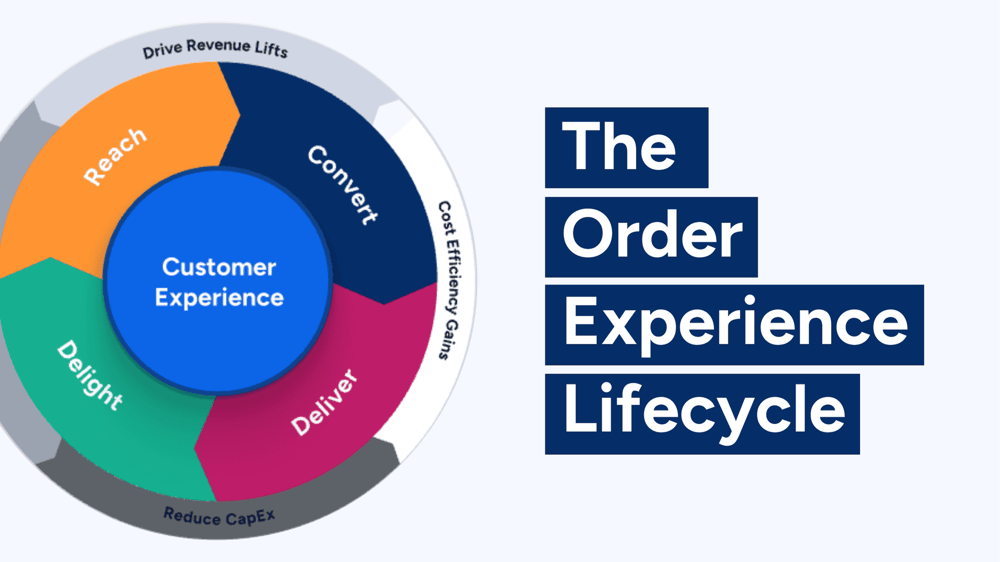
Deck Commerce is an order management and orchestration platform built for brands where ecommerce growth has created real operational complexity.
Deck sits between the channels where customers shop and the systems that manage inventory, fulfillment, and financials, helping brands intelligently orchestrate what happens after an order is placed.
The result is simpler operations, better customer experiences, and the ability to scale without constantly rebuilding the commerce stack.
The order that shipped in five boxes.
Here’s the number that makes the case for prioritizing AI in order management.
Chris’s team took a couple weeks of an apparel brand’s inventory and sales data and ran it through an AI simulation that tested different order orchestration choices for every order. In a short amount of time they had the answer: 3X fewer split shipments and 4 fewer zones of shipping distance.
Translation: an order that went out in five boxes could have gone out in two.
Every extra zone costs money, so the savings are obvious. Chris cares more about the customer getting their stuff faster in fewer boxes, and so do I. Nobody has ever opened their fourth box of the day from a single order and thought, “What a delightful brand.”
What I like even more is how careful he is with it.
He calls the tool version one of agentic order orchestration. A person reviews what the AI recommends and decides what to change. The agents get more control once people trust the results.
Scale breaks the stuff around the order.
Casey asked Chris what scale means at peak, when you run the same process thousands of times on Black Friday and Cyber Monday. His answer speaks volumes.
Going from 1,000 orders to 5,000 means everything around the order has to keep up:
finance still has to close the month,
loyalty points have to post,
payments have to be captured,
and the customer needs to know where their order is in real time.
Miss any of those and you get the outcome Casey can’t stand. And when I Say can’t stand, I mean it may qualify has her number one irritation in all of ecommerce (well, maybe after tech franken-stacks, but that’s another newsletter):
a chatbot added to the website so customers can ask where their package went.
Chris called that solving the symptom. If the order shows up fast, on time, and the customer gets updates along the way, they don’t call.
They don’t cancel.
See: Amazon.
You already own the data.
The part I keep coming back to is how little a brand has to buy to get started. Order management already holds what Chris called a treasure trove of first-party transactional data. Order history. Return history. Where inventory sits right now.
Deck Commerce recently launched agents that put that data in front of people who need it.
A call center rep taps one button and sees whether the person on the phone is a VIP with a long order history or a serial returner. Same idea for inventory: where is it, and should different quantities sit in different locations?
A brand doesn’t need a new channel or a new shopping journey to start. The data is already in the order management system.
Retail Agent Con - November 17, 2026
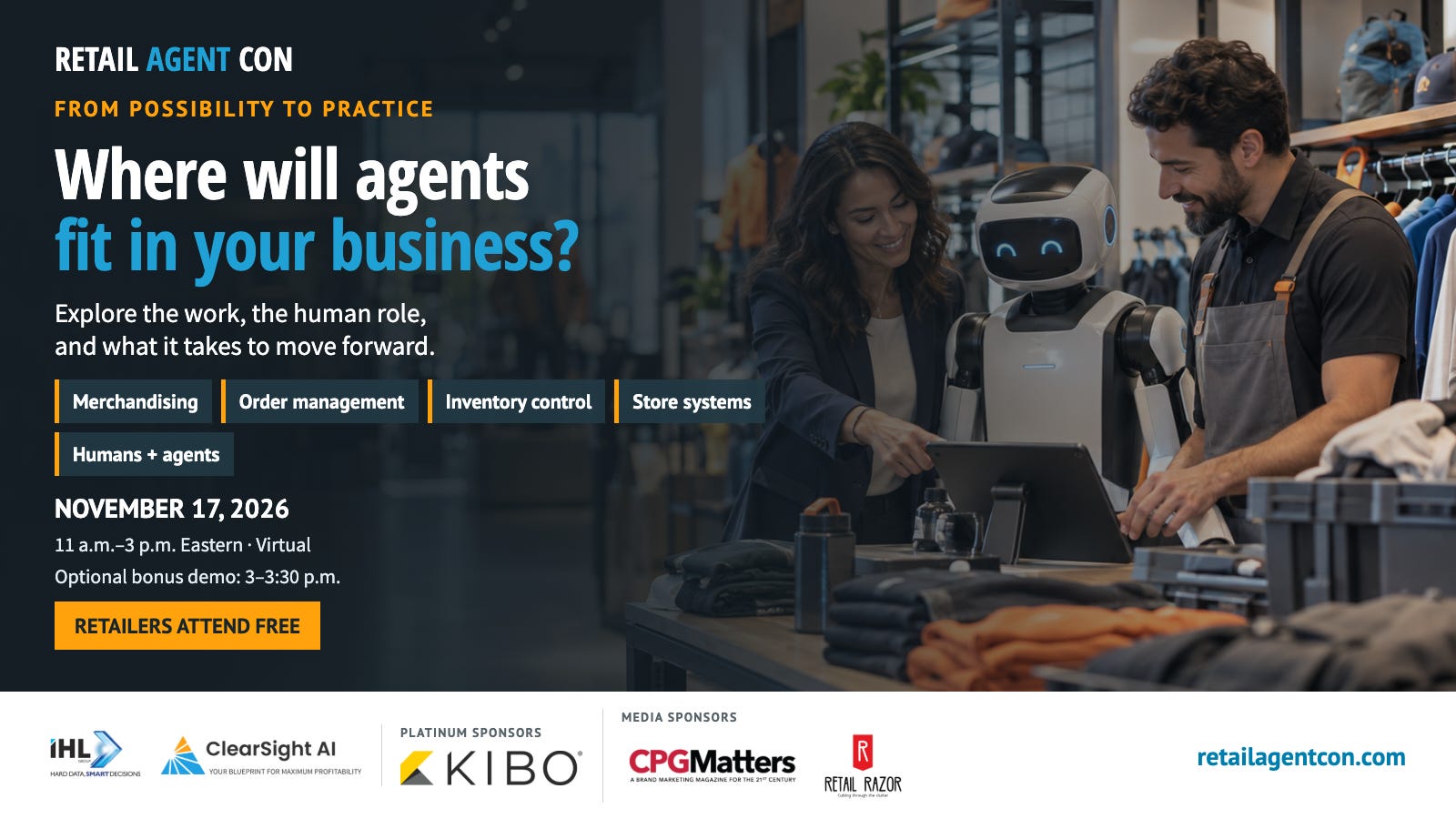
Join Us for Retail Agent Con - November 17, 2026!
Explore how AI agents fit into retail work at Retail Agent Con, a live virtual event on November 17, 2026, from 11 a.m. to 3 p.m. Eastern, produced by IHL Group with ClearSight AI.
Join retail leaders like Glenn Allison of Tractor Supply, Scott Saeger of David’s Bridal and Justin Emig of Artisan Lane Furniture, then Dr. Janet Sherlock on the organizational changes required for agents and humans to work together, analysts like Greg Buzek and Jerry Sheldon of IHL Group and Retail Razor’s Ricardo Belmar, for practical conversations about agents in merchandising, order management, inventory control, store systems, and more.
Retailers attend free, sponsorships and individual tickets are available as well. Learn more at www.retailagentcon.com.
Where I landed.
Everyone at RetailClub wanted to talk about AI shopping agents. Fine. I’m still waiting for personalization to work at scale, so forgive me if I don’t hold my breath for agents to do all of my shopping. (And then there’s the trust issue with <ahem> some of the vendors delivering those agents - but that’s also the topic of a future newsletter).
If I’m a retail leader with a limited AI budget, I’m spending it on order orchestration first.
It’s measurable, it runs on data you already have (and might be the only data you currently have that’s clean enough to reliably use with AI) - the payoff shows up as fewer boxes, lower shipping costs, and customers who never need to call you.
That’s a board slide I’d want to present.
And if your answer to “where’s my order?” is a better chatbot, you’ve built a nicer way to apologize.
There’s one more piece I’m leaving for the episode. Yes, it’s a podcast after all - you need to listen (or watch) for the whole story.
Chris makes the case that order management is “the engine of growth for the next wave of commerce” and breaks it into four parts that loop back on each other. Jump to 18:18 to hear him lay it out.
Casey also tells a store-to-store transfer story that every merchant who has ever fought a markdown will recognize instantly.
Watch, listen, subscribe.
🎙️The Retail Razor: Data Blades, Season 2 Episode 16: “One Order, Five Boxes: How AI Order Management Cut It to Two.”
Listen wherever you get podcasts or watch on our YouTube channel or Spotify.

Your turn.
Next time you’re asking your board for AI investment dollars, consider whether you’re better off spending that investment on operational functions, say, order management, versus diving straight into customer facing agents. You might find the impact on your business AND customer experience is even more appealing at the next board meeting.
This is the second of eight episodes we recorded live and in-person at RetailClub. If this was useful, subscribe so the next one lands in your inbox.
Comment on this newsletter in Substack or join the conversation on LinkedIn.
Stay sharp. Be data-driven. Harness AI.
Sincerely,
Ricardo Belmar
The Retail Razor: Data Blades
Thank You for Your Support!
We’d love your support to help us stay at the top of the charts with all our shows by giving us a five-star rating and review on Apple Podcasts, Goodpods, or Spotify.
Data Blades is part of the Retail Razor Podcast Network, alongside The Retail Razor Show, Retail Transformers, and Blade to Greatness.
Follow us at RetailRazor on LinkedIn, Bluesky, Threads, and Instagram. For a full transcript of this episode, visit our retailrazor.com website!