


The Retail Razor: Data Blades podcast cuts through the noise, turning complex retail research into actionable insights for AI-first strategies that optimize customer experiences and business operations.Stay Sharp. Be Data-Driven. Harness AI!
Missed the last issue?
For the longest time now, it seems every SaaS deck pitched into retail opens by telling the buyer everything wrong with their business. That’s the move. Slide one is the title. Slide two is “here is the problem with your retail business,” followed by some numbers the salesperson or founder probably pulled from a McKinsey report. By slide three the store operator has checked out mentally. By slide five they are nodding and waiting to politely end the meeting.
Shelf Intelligence in 2026: What the Data Actually Says.
Greg Buzek went to a home improvement store for one of those magnetic sweepers you roll across the lawn to grab the leftover roofing nails after a roof repair. He had dogs. He was being responsible. The app said the store had fifteen in stock.
The shelf had zero.
The associate looked. Walked three aisles. Muttered the phrase every American shopper has heard at least once in their adult life. “They’re here somewhere. They’re up on a shelf somewhere.” Fifteen minutes later, Greg gave up, drove down the road, and bought one from a competitor store.
That moment, multiplied by every shopper and every category, is what shelf intelligence is supposed to fix. According to a brand new 2026 Retail Transformation Study from IHL Group, almost nobody has fixed it.
We had Greg on the latest Data Blades podcast to walk through the data, and I want to share what stuck with me, because some of it should make any retail CIO listening to this rethink their 2026 roadmap.
SPONSOR: RetailClub
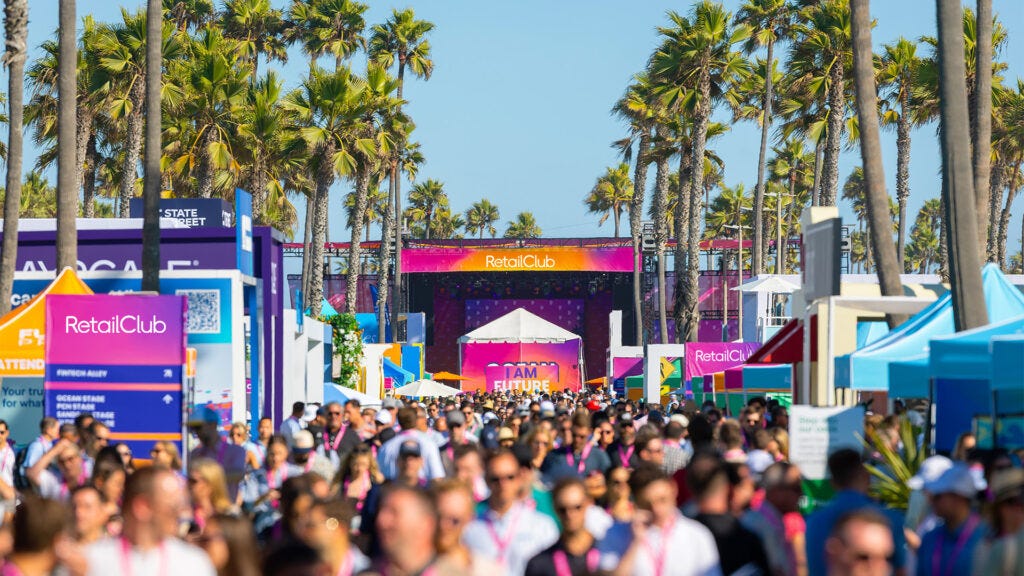
RetailClub AI Festival, September 22 - 24, 2026
The Retail Razor Podcast Network is partnering with RetailClub!
Join 2,000 retail leaders at the RetailClub AI Festival, September 22–24 in Huntington Beach. Dive deep into how AI is reshaping retail while soaking up the sun at a fully outdoor, beachside venue. Decision-makers from retailers and brands can attend with free tickets and up to $1,250 in travel reimbursement.
Head to retailclub.com/retail-razor-podcast to learn more and get your ticket today!
The Number.
Only 9.1% of retailers have current computer vision deployed in stores.
Read that again. After three years of every conference stage, every trade publication, and every vendor pitch deck shouting about computer vision in retail, fewer than one in ten retailers has it running on a current platform. Electronic shelf labels are only marginally better at 12.2%. RFID adoption sits around 20% across the industry.
The cameras are on the ceilings. The tags are on the products. The ESLs are clipped to the rails. The intelligence to make any of it useful is mostly missing.
So why?
The Network Nobody Wants to Talk About.
Greg’s answer surprised me, even though it shouldn’t have. Especially given my retail tech background in store networking technology.
The network underneath the shelf is the thing nobody is talking about. It may also be the only thing that matters.
Picture an RFID read that returns 10,000 items in a single sweep. You only care about the fifty that moved. Where does that processing happen? In the handheld? At the access point? On an edge server? In the cloud? Every retailer answers that question differently, and the wrong answer turns a brilliant pilot into a stalled deployment.
Computer vision is worse. Robots rolling down aisles, cameras on shelves, video uploaded and processed somewhere, all of it needs bandwidth and compute the store probably was not built for. Greg’s exact line, talking about AI tools more broadly: “everybody wants to use them. Just can’t use their models now.”
If your AI tools are getting throttled because your store network was built for a credit card swipe and a price lookup, the shelf intelligence stack you spent six figures on does not work. Full stop.
This is why Greg’s recommended deployment order for a retail CIO this year breaks from most vendor pitches.
Network first.
Edge compute second.
Then ESLs.
Then RFID.
Then computer vision last.
Unless you’re in a high-theft environment where the loss prevention math changes the equation.
Most retailers are running that list in reverse.
The 6.5x Stat I Have Not Stopped Thinking About.
Sales winners (defined in IHL’s study as retailers growing sales 10% or more per year) are six and a half times more likely to be using RFID than their peers.
Six and a half times. Go ahead and read that last line again. I’ll wait.
One of the cleanest correlations I have seen in retail technology research in years. The technology Walmart pushed in the early 2000s, the one everyone wrote off as a failed bet for two decades, is quietly carrying the retailers who are actually winning right now.
(Ok, this is the part where I have to admit - or possibly take a victory lap, we’ll sort that out later - that we called this on The Retail Razor Show back in November of 2023 on season 3 episode 13 with special guest, JP Kamel. We talked about how RFID was revolutionizing retail. In 2023. Go check it out!)
Walmart is back to tagging items under a dollar. Macy’s saw nearly a 50% uptick in shoe sales after deploying RFID in the back room. Uniqlo and Zara run RFID checkout because dealing with size and color makes inventory accuracy non-negotiable. And 89% of all retail orders now get fulfilled from a store, which means if your store-level inventory data is wrong, your entire omnichannel pitch is fiction.
We’ve been talking about and writing about RFID for a long time. (see the callout above for a previous podcast episode). This study finally made the case in numbers that none of us cannot argue with.

The Grocery Stat That Actually Broke Me.
80% of the SKUs in a grocery store sell less than one unit a week.
I had Greg repeat that on the recording, because I assumed I misheard him. He repeated it. The number is correct.
Eighty percent. Of the SKUs. Less than one a week.
Five years ago I would have said grocery has an assortment problem. After this conversation, I’m saying grocery has an assortment & inventory crisis. Most US supermarkets look the way they look because that’s how they’ve always looked, with the same fourteen variants of vanilla extract and the same ten yogurt brands taking up real estate the chain has not measured properly in a decade. (Don’t get me started on yogurt and why MY favorite brand is almost always about to run out, while another brand consumes 85% of the shelf space and no one is buying - that’s a post for another day). Greg’s argument, and I think he’s right, is that shelf intelligence is going to force a remodel of the entire grocery format, because retailers will finally have the data to admit how much of their square footage is just sitting there.
There is a version of this future where the front of the store carries the items that actually sell, the back becomes a robotic micro-fulfillment center, and the slow-moving long tail lives in the warehouse and shows up in a basket you pre-ordered the day before. Co-host Casey has been saying for years that she wants a pre-staged basket waiting for her at the store on shopping day. Because the store should know what she regularly buys. So why’s should she have to build that part of her basket on every visit? The data in this study says her future is closer than the industry thinks.
Here’s The Part I Am Not Telling You.
There’s more in this episode I’m deliberately leaving out of this newsletter. In fact, this episode is approximately twice the usual length of a Data Blades episode because, yes, there were that many data insights to discuss.
The electronic shelf labels controversy that has unions actively pushing back, after years of quietly tolerating the same technology
Greg’s read on facial recognition for loss prevention, including the 74% theft reduction stat and the cultural divide that keeps it out of most US stores
The autonomous robot economics that finally make robot-as-a-service viable for chains that do not need a robot every day
Casey’s “butter inner circle” story, which is the funniest thirty seconds of retail consumer behavior research you will hear all year, and which made me realize my friend group is also doing this with very good olive oil. That last part about the olive oil isn’t in this podcast. I’ll save it for a future episode, or let me know in the comments if you absolutely have to know right now.
You have to listen or watch for the rest. That is the entire point of a podcast., after all.
What I Actually Think.
Most of the shelf intelligence conversation in the industry right now is theater. There are too many retailers running flashy pilots on cameras, smart shelves, and robots while the store network underneath is held together with extension cords, good vibes, and a lot of hope.
The 9.1% computer vision figure has a simpler explanation than “retailers are slow.” The work being done on the floor has been wrong, in the wrong order, for several years running. The retailers winning in IHL’s study put the boring infrastructure first and treated shelf intelligence like an architectural decision instead of a procurement one. That’s the entire game.
If you’re a retail CIO listening to Casey and me ramble in your podcast app, this is the call to action. Open your IT roadmap. Find your shelf intelligence line item. Now look one row above it and ask whether your stores can actually handle what you’re about to deploy. If the honest answer is no, the answer is also why your pilot is stuck.
Greg is back next episode for Part 2, where we get into store associate tools and a hiring data point that genuinely surprised me. And if you’re a regular listener/viewer, you know how serious we are about supporting store teams. Part 3 covers supply chain, returns, and a 555% capability gap between winners and laggards that may be the single most important number in the entire 2026 study. Stay tuned!
Listen to the Full Episode.
🎙️ The Retail Razor: Data Blades, Season 2 Episode 7: “Shelf Intelligence Reality Check: Why Only 9.1% of Retailers Are Ready” with Greg Buzek of IHL Group
Available now on Apple Podcasts, Spotify, YouTube, Goodpods, and anywhere you find podcasts. Full transcript and show notes at retailrazor.com.


Your Turn.
If this newsletter made you think, forward it to the CIO on your team who is still trying to figure out why the smart shelf pilot stalled. And if you are not already subscribed, the button is right down there. I write about retail, commerce, leadership, and the technology actually moving them forward, every issue. No fluff, no jargon, no pretending the industry is further along than it is.
What is your team prioritizing first on the shelf intelligence stack in 2026? Comment on this newsletter in Substack or join the conversation on LinkedIn.
Until next time: Stay sharp, be data-driven, and remember, always harness a bit of AI charm!
Sincerely,
Ricardo Belmar
The Retail Razor: Data Blades podcast
Thank You for Your Support!
We’re honored to be the #1 Indie Podcast Network for Retail on Goodpods with the:
Top 4 podcasts in the Top Weekly Management Podcast charts
Top 4 podcasts in the Top Monthly Management Podcast charts
#1 podcast in the Top Weekly & Monthly Indie Careers Podcast charts
#1 podcast in the Top Weekly & Monthly Indie Marketing Podcast charts
And we’re excited to have two podcasts ranking in the Top 20 Retail Management podcasts and a Top 5 Retail Careers podcast on Apple Podcasts!
We’d love your support to help us stay at the top with all our shows by giving us a five-star rating and review on Apple Podcasts, Goodpods, or Spotify.
The Retail Razor Podcast Network
The Retail Razor:Data Blades show is part of The Retail Razor Podcast Network alongside our other shows:
Please leave us feedback by posting your comments to Notes on Substack, Apple Podcasts, Spotify, YouTube, or Goodpods.
Connect with us on LinkedIn.
Subscribe & watch on YouTube.
Follow us on Instagram, Threads, Bluesky, and Facebook.
For a full transcript of this episode, visit our Retail Razor Podcast Network website!