


Join the #1 Indie Podcast Network for Retail as we cut through the clutter in retail strategy, innovation & leadership to help you maximize growth for your business. Subscribe to The Retail Razor Show podcast! Stay sharp. Stay human. Stay ahead!
Missed the last issue?

Should your refrigerator have a personality? Cole Moir spent the last three years leading brand marketing at TCL, which makes, among other things, refrigerators. So the joke may not age well. That’s the problem with marketing right now. The absurd thing you say to get a laugh is somebody’s roadmap.
I’ve been promised robots my whole life.
Casey joked on this episode that she expected to be living like the Jetsons by now. Instead, she’s doing her own dishes and hauling her own Amazon returns. I’m in the same boat. Decades of demos, and robotics has mostly lived somewhere between science fiction and a slide deck.
So I came into this conversation open-eyed and enthusiastic, while also a bit skeptical. What gave it an edge and drew me in was one of Brittain Ladd’s LinkedIn posts about grocery retail.
If you spend much of your time doom-scrolling your LinkedIn feed you’ve seen Brittain tell grocery leaders to go meet Hank Crawford and his team. Repeatedly. Across multiple posts. Brittain doesn’t hand those out for fun. He only doles out recommendations like this after a thorough analysis which he fully documents in his posts. I wanted to know what he was seeing that the rest of us were missing.
So we invited Hank onto the show, and he brought Paul Harker with him. Hank is Co-Founder and CEO of Blue Collar Robotics. Paul retired as Chief Commercial Officer of Woolworths Group, Australia’s largest retailer, and signed on with Blue Collar as a strategic advisor. That second part matters. A man with nothing left to prove doesn’t lend his name to a robotics startup casually.
SPONSOR: RetailClub
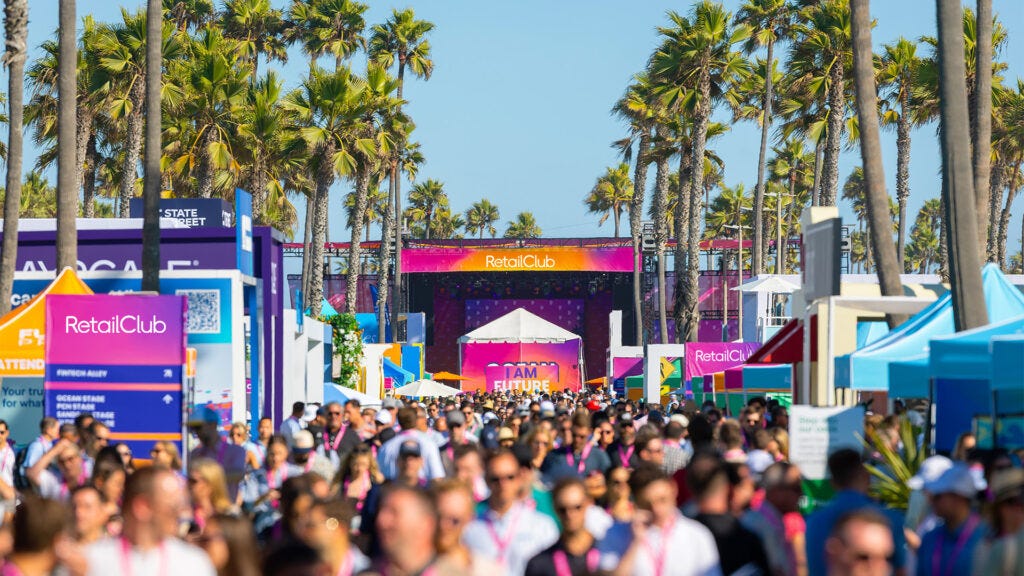
RetailClub AI Festival, September 22 - 24, 2026
The Retail Razor Podcast Network is partnering with RetailClub!
Retail and brand leaders can attend RetailClub AI Festival completely budget-free, plus get $1,750 toward travel and hotel. From the founders of Shoptalk and Groceryshop, it's three days fully outdoors in Huntington Beach, September 22 to 24, with 2,000 senior leaders working through how AI is transforming retail. If you're shaping AI's future in retail, budget shouldn't be why you miss it.
Register by August 28 at retailclub.com/retail-razor-podcast.
The number that reset the conversation.
There are about 280,000 people picking groceries inside US stores right now.
In the aisle, with a cart, walking past you while you shop, assembling somebody else’s order. The demand for that work is growing faster than grocers can hire for it, especially at 2 and 3 in the morning, which is exactly when you’d want it done.
I’ve watched the friction firsthand at my own store. Shoppers looking irritated because they feel like they’re in the way. Pickers looking irritated because they are, in fact, in the way.
Casey put it best:
New Yorkers and tourists need separate sidewalk lanes, and the grocery aisle has the same problem with two people on two different missions.
If you’ve been to New York City at the end of a work day, you know exactly why Casey’s comparison resonates. And if you haven’t… it’s ok, no judgment.
Paul’s number is the one that should worry any grocery retail operator.
Over 80% of a grocer’s business is still the customer physically in the store.
So eGrocery growth, the thing everyone is chasing, is quietly degrading the business that pays the bills, and delivers the largest share of customer experience.
The warehouse answer already lost.
The industry’s first attempt to solve the eGrocery fulfillment problem was possibly the most obvious one. Copy general e-commerce and build a big automated centralized fulfillment center Then pick everything there.
Hank listed four reasons it collapsed, and none of them are fixable with a better robot.
The economics are volume dependent, so you need order density to justify the building. The building pulls inventory away from the customer, which pushes last-mile cost back up. Fresh resists automation. And the capital expense is enormous. A spend that duplicates the store network the grocer already paid for.
Micro fulfillment centers were the compromise, and Paul took them apart just as cleanly. Casey and I were surprised. We remember our MFC episode from season 2. At the time, it showed a lot of promise.
The challenge is you still need space adjacent to the store or you carve into your own selling floor. You still carry heavy CapEx. You duplicate inventory. And people still pick the fresh items and what he calls the uglies, because nobody has automated someone ordering a mop.
So the industry came back to the store. With people. All 280,000 of them.
Is AI coming for retail jobs, or isn’t it?

They sell picks by the item.
Here’s the part I keep chewing on. Blue Collar’s product is the pick itself. Not the robot rolling through the aisles doing the picking.
A grocer pays a cost per pick, which means the spend lands in OpEx instead of a capital project, and the grocer never hires a robotics engineer. Blue Collar signs up to a contracted pick rate and a quality standard.
Hank’s line was blunt: if they miss it, the retailer doesn’t pay the bill.
The robot handles packaged center-aisle goods with vacuum suction, which is roughly 65% of a typical basket. Frozen food behind glass doors is out of scope. Fresh stays with the associates, which is where you’d want your best people anyway. picking ripe avocados.
Blue Collar reports fulfillment cost down by as much as 50%.
And there’s a person behind every robot.
A remote operator watches, takes the hard calls, and the robot learns from what that person does. Hank designed it that way on purpose, partly so the robot develops what he calls robot etiquette: it hangs back and lets the shopper shop.
He’s got a story about a hotel in China that explains exactly what he’s trying to avoid. It’s at 40:18 and it’s worth the two minutes.
Where I landed.
I went in expecting a labor-replacement pitch and got the opposite argument.
Hank’s position is that nobody is standing in line for picking jobs. Grocers can’t fill the roles they already have.
eGrocery is somewhere around 15% of the business and could double inside two to five years.
The constraint is scarcity.
Then Paul made the point that’s stuck with me ever since. Today you can only take that job if you can physically get to one specific store during specific hours. Remote operation deletes both constraints. Someone who uses a wheelchair can’t walk a store picking orders. They can run a robot that does.
The thing I can’t shake is Hank’s read on his own pipeline. The national retailers are finding him. They understand the problem. What’s missing is urgency.
Amazon isn’t waiting around for anyone’s urgency.
The HQ to store disconnect is real. Your pitch isn’t fixing it.
Listen to the whole thing.
🎙️The Retail Razor Show, Season 6 Episode 10: “280,000 Pickers: The eGrocery Fulfillment Math Nobody Fixed”
Hank and Paul are both worth the full hour, and Paul has a genuinely strong philosophical detour near the end about whether societies will bend the real world to suit robots or build robots that suit the real world. I didn’t see that one coming.
If you’re new here, subscribe. We publish an edition for every episode of The Retail Razor Show, plus bonus content that doesn’t make the recording.

Your Turn.
If you learned something from this issue, subscribe so the next edition finds you.
Next episode: we’re jumping head first into the world, and history, of in-store retail media. The former head of Walmart TV’s successor, Walmart Smart Network tells us where it’s headed.
Comment on this newsletter or join the conversation on LinkedIn!
Your insights may help shape the topics we explore next.
Until next time… Stay sharp. Stay human. Stay ahead!
Sincerely,
Ricardo Belmar
The Retail Razor Show
Thank You for Your Support!
We’re honored to be the #1 Indie Podcast Network for Retail on Goodpods with our shows regularly in the Top 5 of the weekly & monthly Management podcast charts. Plus, the #1 podcast in the weekly & monthly Indie Marketing and Indie Careers podcast charts.
We’re also excited to have two podcasts ranking in the Top 20 Retail Management podcasts and a Top 3 Retail Careers podcast on Apple Podcasts!
We’d love your support to help us stay at the top with all our shows by giving us a five-star rating and review on Apple Podcasts, Goodpods, or Spotify.
The Retail Razor Show is part of the Retail Razor Podcast Network, alongside Retail Transformers, Blade to Greatness, and Data Blades. Find us at RetailRazor on LinkedIn, Bluesky, Threads, and Instagram. For a full transcript of this episode, visit our retailrazor.com website!
I really liked the split between robots handling packaged goods and people keeping the fresh, frozen, and unusual items. It feels much more credible than trying to automate the whole store at once. The per-pick pricing is also interesting because it forces the vendor to own the result, instead of selling the retailer a machine and leaving them to make it work.
Ricardo, thank you! Another serving of great retail brain food. 280K positions, with constant turnover, and a very smart separation of tasks: robots for the center of the store, humans for fresh, fridg'd and frozen. For an growing consumer cohort that, I would expect, reflects the highest CLV and least annual churn. Bravo!